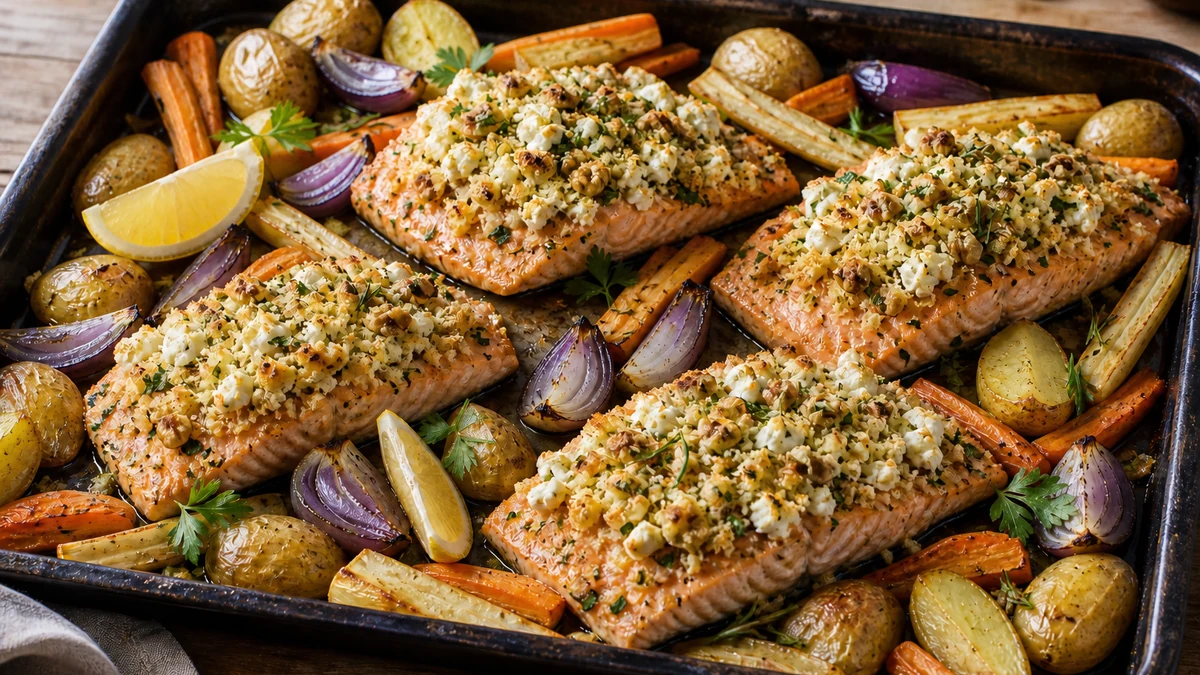
- Prep: 25 min
- Cook: 40 min
- Serves: 4 servings
- Level: Moderate
- Category: Main course
Method
- 01
Heat the tray
Heat the oven to 220°C/200°C fan. Leave a large, sturdy baking tray on the middle shelf as the oven comes up to temperature; the hot metal helps the vegetables brown rather than steam.
- 02
Cut the roots evenly
Toss the potatoes, carrots and parsnips with 2 tbsp olive oil, salt and pepper. Keep the pieces a similar thickness even if their shapes differ.
- 03
Give the roots a head start
Tip the root vegetables onto the hot tray and spread them into a single layer. Roast undisturbed for 15 minutes so the cut sides touching the metal develop a good golden crust.
- 04
Add the red onion
Turn the vegetables. Toss the red-onion wedges with the remaining oil, add them to the tray and roast for another 5 minutes while you prepare the salmon.
- 05
Stir together the glaze
Stir the Dijon mustard, honey and lemon juice into a smooth glaze. Pat the salmon dry, season it and brush each portion with a thin coating.
- 06
Mix the goat’s cheese crust
Crumble the goat’s cheese and fold it gently through the walnuts, panko, lemon zest, garlic, rosemary, parsley and 1 tbsp olive oil. Keep the mixture rough and crumbly rather than working it into a paste.
- 07
Top and roast the salmon
Make four gaps among the vegetables and add the salmon, skin-side down if it has skin. Spoon over the crust and press it only lightly into place. Roast for 12–16 minutes, checking the thinnest piece after 12 minutes.
- 08
Rest, finish and serve
Leave the salmon to rest on the tray for 3 minutes. Squeeze lemon over the root vegetables, check the seasoning and serve straight away while the crust is still crisp.
What to look for
Matching thickness matters more than matching shape: very uneven pieces will not become tender at the same time.
Crumble the cheese rather than mashing it. Pockets of air between the goat’s cheese and panko give the crust a lighter, crisper finish.
If the salmon portions differ in thickness, lift out the thinnest one first and give the others a few minutes longer.
Slip a small piece of baking parchment beneath the fish if the tray is very dark or the honey starts catching around the edges.